
-
Hidden Kingdoms
-
BBC
Immerse yourself in the lives of extraordinary characters that stand a few inches tall. From chipmunks to mice, be entertained and spellbound by the creatures that call the Hidden Kingdoms home.
- TV-Recordings
- English subtitles
- 180
Immerse yourself in the lives of extraordinary characters that stand a few inches tall. From chipmunks to mice, be entertained and spellbound by the creatures that call the Hidden Kingdoms home.

This is the story of two young animals forced to grow up fast. In Africa's savannah, a baby elephant shrew learns how speed is the secret to survival amongst the largest animals on Earth; and in America, a young grasshopper mouse confronts the Wild West's deadliest creatures to stake a claim of his own.
- TV-Recordings
- Natural World
- English subtitles
- 60
This is the story of two young animals forced to grow up fast. In Africa's savannah, a baby elephant shrew learns how speed is the secret to survival amongst the largest animals on Earth; and in America, a young grasshopper mouse confronts the Wild West's deadliest creatures to stake a claim of his own.
This is the story of two tiny animals coming of age.
- TV-Recordings
- Natural World
- English subtitles
- 60
This is the story of two tiny animals coming of age.

The world's oceans claim on average one ship a week, often in mysterious circumstances. With little evidence to go on, investigators usually point at human error or poor maintenance but an alarming series of disappearances and near-sinkings, including world-class vessels with unblemished track records, has prompted the search for a more sinister cause and renewed belief in a maritime myth: the wall of water
- TV-Recordings
- Geography
- TV-Recordings
- No subtitles
- 48
The world's oceans claim on average one ship a week, often in mysterious circumstances. With little evidence to go on, investigators usually point at human error or poor maintenance but an alarming series of disappearances and near-sinkings, including world-class vessels with unblemished track records, has prompted the search for a more sinister cause and renewed belief in a maritime myth: the wall of water
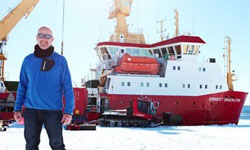
Antarctica is the last great wilderness. It's the coldest, windiest, driest and most isolated place on Earth. And every winter, for over three months of the year, the sun never rises. But it's also home to the British Antarctic Survey's Halley Research Station.
- TV-Recordings
- English subtitles
- 60
Antarctica is the last great wilderness. It's the coldest, windiest, driest and most isolated place on Earth. And every winter, for over three months of the year, the sun never rises. But it's also home to the British Antarctic Survey's Halley Research Station.
Professor Iain Stewart examines the powerful geological forces that unleashed the devastating Japanese earthquake, and explores how the release of this power of the planet brought Japan to the brink of a nuclear meltdown.
- TV-Recordings
- Environmental Studies
- Geology
- TV-Recordings
- No subtitles
- 60
Professor Iain Stewart examines the powerful geological forces that unleashed the devastating Japanese earthquake, and explores how the release of this power of the planet brought Japan to the brink of a nuclear meltdown.
Liz Bonnin presents a controversial and provocative episode of Horizon, investigating how new scientific research is raising hard questions about zoos - the film explores how and why zoos keep animals, and whether they need to change to keep up with modern science or ultimately be consigned to history.
- TV-Recordings
- English subtitles
- 60
Liz Bonnin presents a controversial and provocative episode of Horizon, investigating how new scientific research is raising hard questions about zoos - the film explores how and why zoos keep animals, and whether they need to change to keep up with modern science or ultimately be consigned to history.
The film also uncovers the disturbing story of how shipping noise is deafening whales and dolphins, affecting their survival in the future.
- TV-Recordings
- Environmental Studies
- Other
- TV-Recordings
- English subtitles
- 60
The film also uncovers the disturbing story of how shipping noise is deafening whales and dolphins, affecting their survival in the future.
-
Human Planet
-
BBC
Human Planet, a cinematic experience, bringing you the most amazing human stories in the world today. Humans and wildlife surviving in the most extreme environments on Earth.
- TV-Recordings
- No subtitles
- 980
Human Planet, a cinematic experience, bringing you the most amazing human stories in the world today. Humans and wildlife surviving in the most extreme environments on Earth.
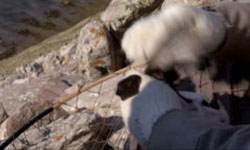
The Arctic is the harshest environment on Earth: little food grows, it\'s dark for months on end, and temperatures stay well below freezing for much of the year. Yet four million people manage to survive here.
- TV-Recordings
- Geography
- TV-Recordings
- No subtitles
- 60
The Arctic is the harshest environment on Earth: little food grows, it\'s dark for months on end, and temperatures stay well below freezing for much of the year. Yet four million people manage to survive here.
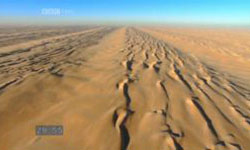
A total of 10 stories from across the Human Planet series, closely linked to the KS2 Geography curriculum, look at how humans have learnt to live with extremes, and explore how people across the globe live with extreme cold; live in desert environments without water; and how they live in mountain regions facing daily hazards.
- TV-Recordings
- Geography
- TV-Recordings
- No subtitles
- 60
A total of 10 stories from across the Human Planet series, closely linked to the KS2 Geography curriculum, look at how humans have learnt to live with extremes, and explore how people across the globe live with extreme cold; live in desert environments without water; and how they live in mountain regions facing daily hazards.

A look at the one environment that\'s been made by us for us - the city. Over half of the world\'s population now lives in the urban jungle. The city is built to keep untamed nature out - but nature can\'t be pushed away. From bed bugs sucking our blood at night to rats in our restaurants, many animals have adapted to a life with us.
- TV-Recordings
- Built Environment & Architecture
- TV-Recordings
- No subtitles
- 60
A look at the one environment that\'s been made by us for us - the city. Over half of the world\'s population now lives in the urban jungle. The city is built to keep untamed nature out - but nature can\'t be pushed away. From bed bugs sucking our blood at night to rats in our restaurants, many animals have adapted to a life with us.
We can survive for weeks without food, but only days without water: it is the essential element of life. Yet many millions of us live in parched deserts around the world. In the second episode of Human Planet, we discover how the eternal quest for water brings huge challenges - and ingenious solutions - in the driest places on Earth.
- TV-Recordings
- Environmental Studies
- Other
- TV-Recordings
- No subtitles
- 60
We can survive for weeks without food, but only days without water: it is the essential element of life. Yet many millions of us live in parched deserts around the world. In the second episode of Human Planet, we discover how the eternal quest for water brings huge challenges - and ingenious solutions - in the driest places on Earth.
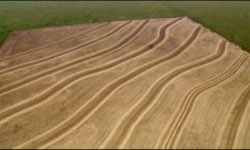
Grasslands feed the world. Over thousands of years, we humans have learned to grow grains on the grasslands and domesticate the creatures that live there. Our success has propelled our population to almost seven billion people.
- TV-Recordings
- Environmental Studies
- Other
- TV-Recordings
- No subtitles
- 60
Grasslands feed the world. Over thousands of years, we humans have learned to grow grains on the grasslands and domesticate the creatures that live there. Our success has propelled our population to almost seven billion people.
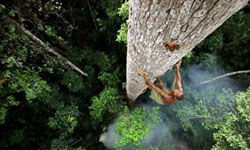
The rainforest is home to more species of plants and animals than any other habitat on the planet. But for humans, life there is not as easy as it looks. Life in the trees requires great skill, ingenuity and sheer bravery.
- TV-Recordings
- Environmental Studies
- Other
- TV-Recordings
- No subtitles
- 60
The rainforest is home to more species of plants and animals than any other habitat on the planet. But for humans, life there is not as easy as it looks. Life in the trees requires great skill, ingenuity and sheer bravery.
From lush cloud forests to bare summits that take your breath away, the higher you climb the tougher life gets on a mountain. Human Planet explores the extraordinary ways in which people survive at extreme altitudes where nature becomes utterly unforgiving.
- TV-Recordings
- Geography
- TV-Recordings
- No subtitles
- 60
From lush cloud forests to bare summits that take your breath away, the higher you climb the tougher life gets on a mountain. Human Planet explores the extraordinary ways in which people survive at extreme altitudes where nature becomes utterly unforgiving.

As an air-breathing animal, the human is not built to survive in water. But people have found ways to live an almost aquatic life so they can exploit the sea\'s riches.
- TV-Recordings
- Geography
- TV-Recordings
- No subtitles
- 60
As an air-breathing animal, the human is not built to survive in water. But people have found ways to live an almost aquatic life so they can exploit the sea\'s riches.

Rivers provide the essentials of life: fresh food and water. They often provide natural highways and enable us to live in just about every environment on Earth. But rivers can also flood, freeze or disappear altogether!
- TV-Recordings
- Environmental Studies
- TV-Recordings
- No subtitles
- 60
Rivers provide the essentials of life: fresh food and water. They often provide natural highways and enable us to live in just about every environment on Earth. But rivers can also flood, freeze or disappear altogether!
-
Inside Nature's Giants
-
Channel 4
The award-winning series that gets under the skin of some of the largest animals on the planet,exploring their anatomy to reveal how these creatures really work.
- TV-Recordings
- No subtitles
- 550
The award-winning series that gets under the skin of some of the largest animals on the planet,exploring their anatomy to reveal how these creatures really work.

The second run of the BAFTA Award-winning series reveals the anatomy of some of nature\'s most successful predators.The experts travel to South Africa to dissect a 900kg, 15-foot-long great white shark.
- TV-Recordings
- Biology
- Medical Sciences
- TV-Recordings
- No subtitles
- 50
The second run of the BAFTA Award-winning series reveals the anatomy of some of nature\'s most successful predators.The experts travel to South Africa to dissect a 900kg, 15-foot-long great white shark.

-
Inside Nature's Giants - Monster Python
-
Channel 4
The experts venture into the swamps of the Florida Everglades, where giant Burmese pythons are thriving.
- TV-Recordings
- Biology
- TV-Recordings
- No subtitles
- 50
The experts venture into the swamps of the Florida Everglades, where giant Burmese pythons are thriving.
-
Inside Nature's Giants - The Big Cats
-
Channel 4
The experts dissect a lion and a tiger, and travel to South Africa to see lions in the wild.
- TV-Recordings
- Biology
- TV-Recordings
- No subtitles
- 50
The experts dissect a lion and a tiger, and travel to South Africa to see lions in the wild.
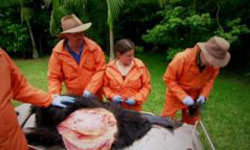
The Bafta-winning series returns to Australia on the trail of a bird that\'s been described as a living dinosaur. The cassowary hides in Queensland\'s tropical rainforests.
- TV-Recordings
- Biology
- TV-Recordings
- No subtitles
- 47
The Bafta-winning series returns to Australia on the trail of a bird that\'s been described as a living dinosaur. The cassowary hides in Queensland\'s tropical rainforests.
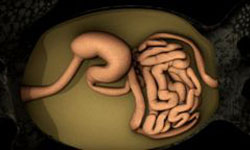
The team travel to Florida to dissect the ocean's largest reptile - the leatherback turtle. They uncover the evolutionary mystery of how turtles developed shells to protect themselves from some of the sharpest-toothed predators on the planet.
- TV-Recordings
- Biology
- TV-Recordings
- English subtitles
- 47
The team travel to Florida to dissect the ocean's largest reptile - the leatherback turtle. They uncover the evolutionary mystery of how turtles developed shells to protect themselves from some of the sharpest-toothed predators on the planet.

-
Inside Nature's Giants - The Racehorse
-
Channel 4
The team explore how this animal has been biologically engineered for speed. They dissect an elite racehorse to reveal the extraordinary spring system that propels it to 45mph, its super-sized organs and built-in turbo-booster.
- TV-Recordings
- Biology
- Medical Sciences
- TV-Recordings
- No subtitles
- 50
The team explore how this animal has been biologically engineered for speed. They dissect an elite racehorse to reveal the extraordinary spring system that propels it to 45mph, its super-sized organs and built-in turbo-booster.
-
Inside Nature's Giants: Polar Bear
-
Channel 4
The team join Inuit hunters and scientists studying polar bears off the coast of Greenland. Polar bears have become a symbol of climate change as their habitat is threatened. And, at the top of the food chain, they are especially vulnerable to physiological side effects from man-made pollutants.
- TV-Recordings
- Biology
- Environmental Studies
- TV-Recordings
- English subtitles
- 62
The team join Inuit hunters and scientists studying polar bears off the coast of Greenland. Polar bears have become a symbol of climate change as their habitat is threatened. And, at the top of the food chain, they are especially vulnerable to physiological side effects from man-made pollutants.
-
Inside Natures Giants - The Crocodile
-
Channel 4
Veterinary scientist Mark Evans joins experts in anatomy, evolution and behaviour in a bid to get under the skin of the crocodile.
- TV-Recordings
- Biology
- Medical Sciences
- TV-Recordings
- No subtitles
- 30
Veterinary scientist Mark Evans joins experts in anatomy, evolution and behaviour in a bid to get under the skin of the crocodile.
-
Inside Natures Giants - The Whale
-
Channel 4
In this episode experts dissect a 65-foot, 60-ton fin whale - second only in size to its \'cousin\' the blue whale - that has died after being stranded off the coast of Ireland. It\'s a race against time as whale anatomist Joy Reidenberg flies in from New York before the animal\'s decomposition causes it to explode on the beach.
- TV-Recordings
- Biology
- TV-Recordings
- No subtitles
- 48
In this episode experts dissect a 65-foot, 60-ton fin whale - second only in size to its \'cousin\' the blue whale - that has died after being stranded off the coast of Ireland. It\'s a race against time as whale anatomist Joy Reidenberg flies in from New York before the animal\'s decomposition causes it to explode on the beach.
-
Krakatoa Revealed
-
Nick Petford
Documentary, featuring specially commissioned research, which reveals for the first time what really happened during the eruption of the volcanic island Krakatoa in 1883
- TV-Recordings
- Geography
- History
- TV-Recordings
- No subtitles
- 11
Documentary, featuring specially commissioned research, which reveals for the first time what really happened during the eruption of the volcanic island Krakatoa in 1883